Why Governance Matters More Than Management in the AI Era

Why Governance Matters More Than Management in the AI Era

In an AI-enabled organization, management is not the constraint. Governance is. Learn why strategy is shifting from execution to decision rules.

Jan 24, 20258 min read
From Ad-Hoc Disposal to Institutional Discipline

From Ad-Hoc Disposal to Institutional Discipline

Most enterprises stumble into SCALM when 'sufficient' becomes expensive. Discover how to turn surplus from operational residue into governed capital.

Jan 14, 20269 min read
The Hidden Cost of Idle Capital Assets (Working Capital Analysis)

The Hidden Cost of Idle Capital Assets (Working Capital Analysis)

Idle isn't neutral—it's a financial state with operational causes. A working-capital deep dive on decision latency, governance, and metrics.

Jan 18, 20269 min read
Who Owns Surplus Capital Assets Inside the Enterprise?

Who Owns Surplus Capital Assets Inside the Enterprise?

Surplus capital assets don't fail because they lack value—they fail because they lack ownership. A decision‑rights view of surplus governance.

Jan 15, 20269 min read
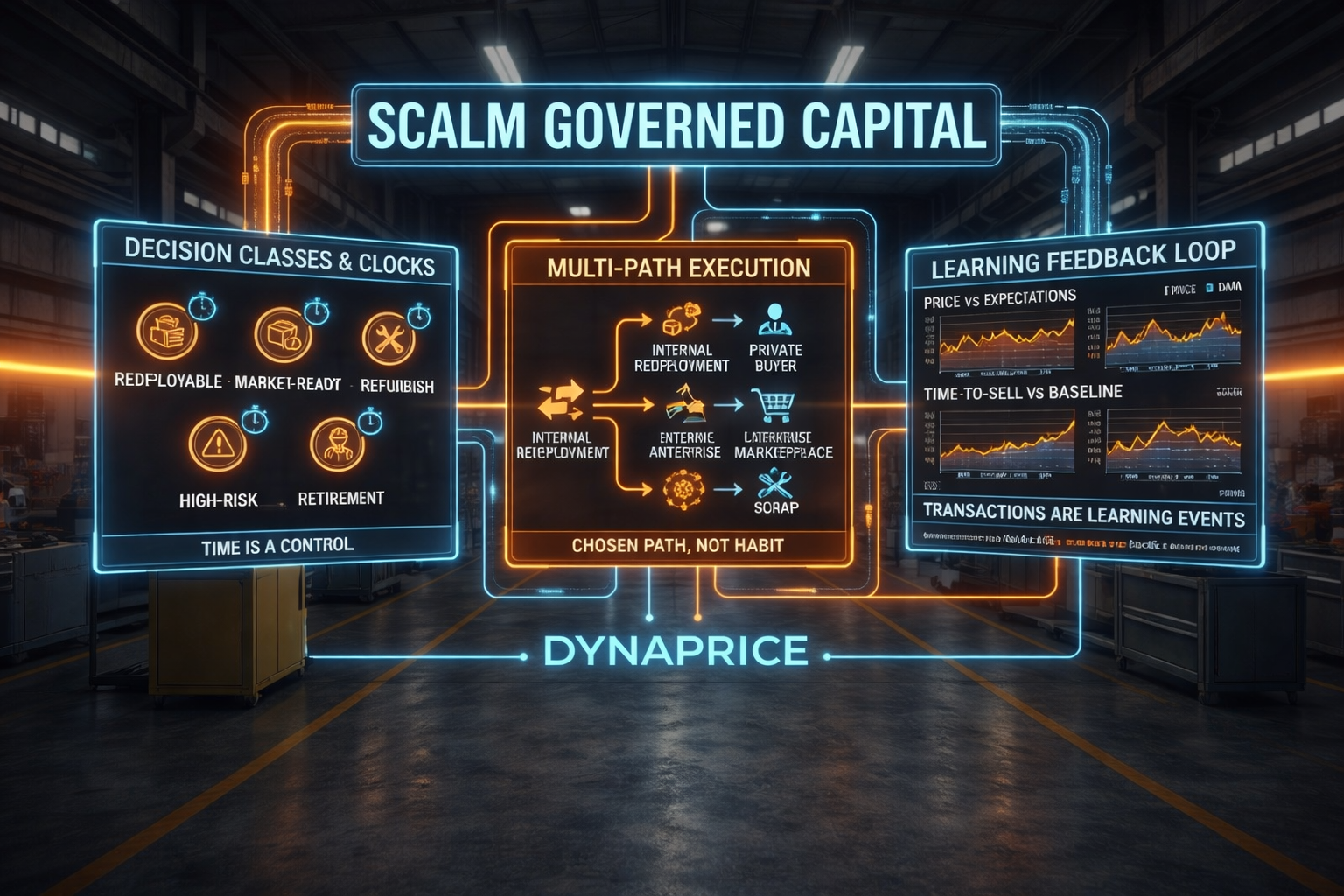
Surplus Is Not a Cleanup Activity. It Is Capital.

Surplus Is Not a Cleanup Activity. It Is Capital.

A CFO-oriented brief on surplus governance: combat decision latency, preserve value, and manage surplus as a governed capital portfolio.

Jan 02, 20267 min read
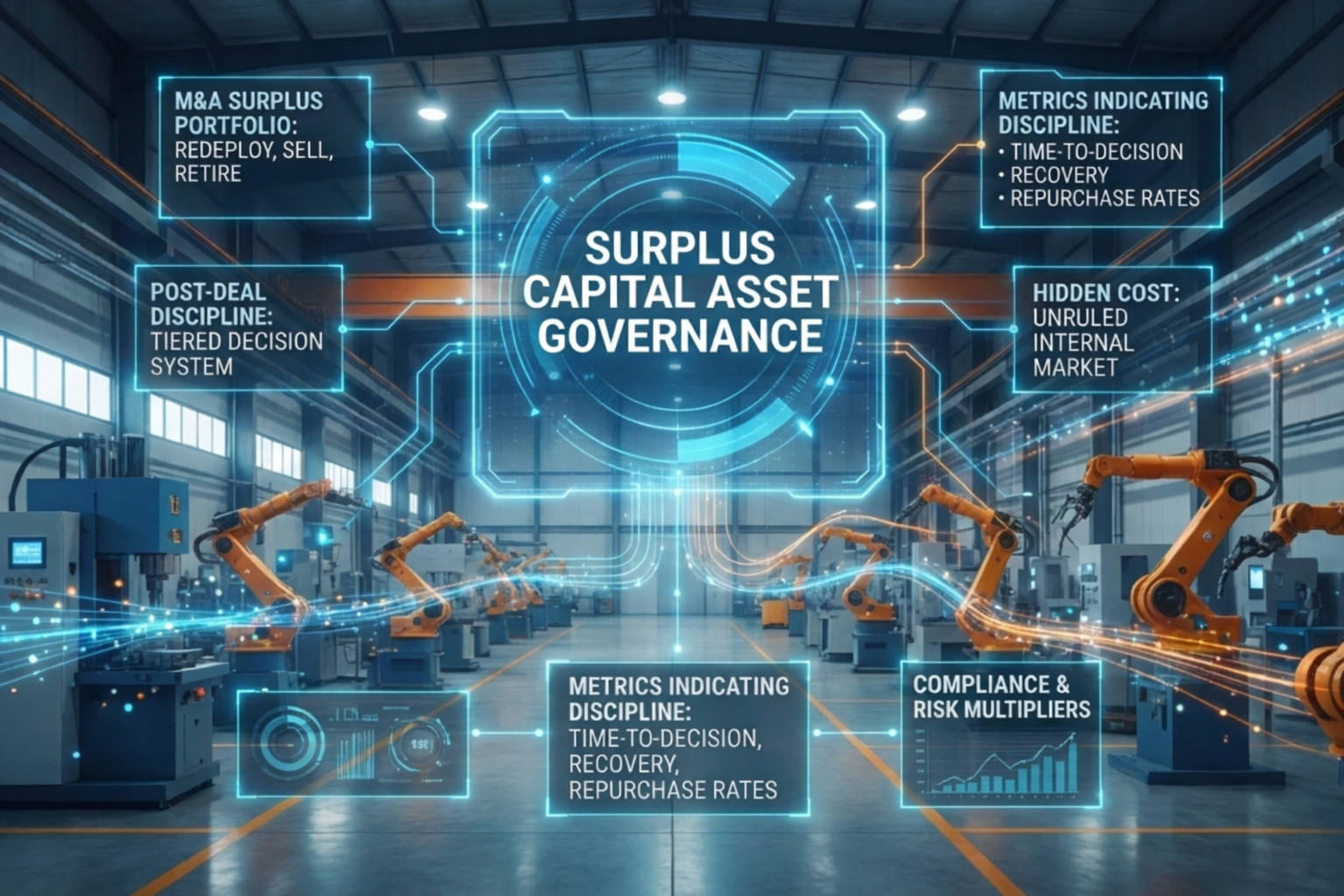
Surplus Capital Assets in M&A: The Missing Post-Deal Discipline

Surplus Capital Assets in M&A: The Missing Post-Deal Discipline

M&A combines businesses on paper, but inventories in practice. A post‑deal discipline for governing surplus capital assets.

Dec 24, 202511 min read
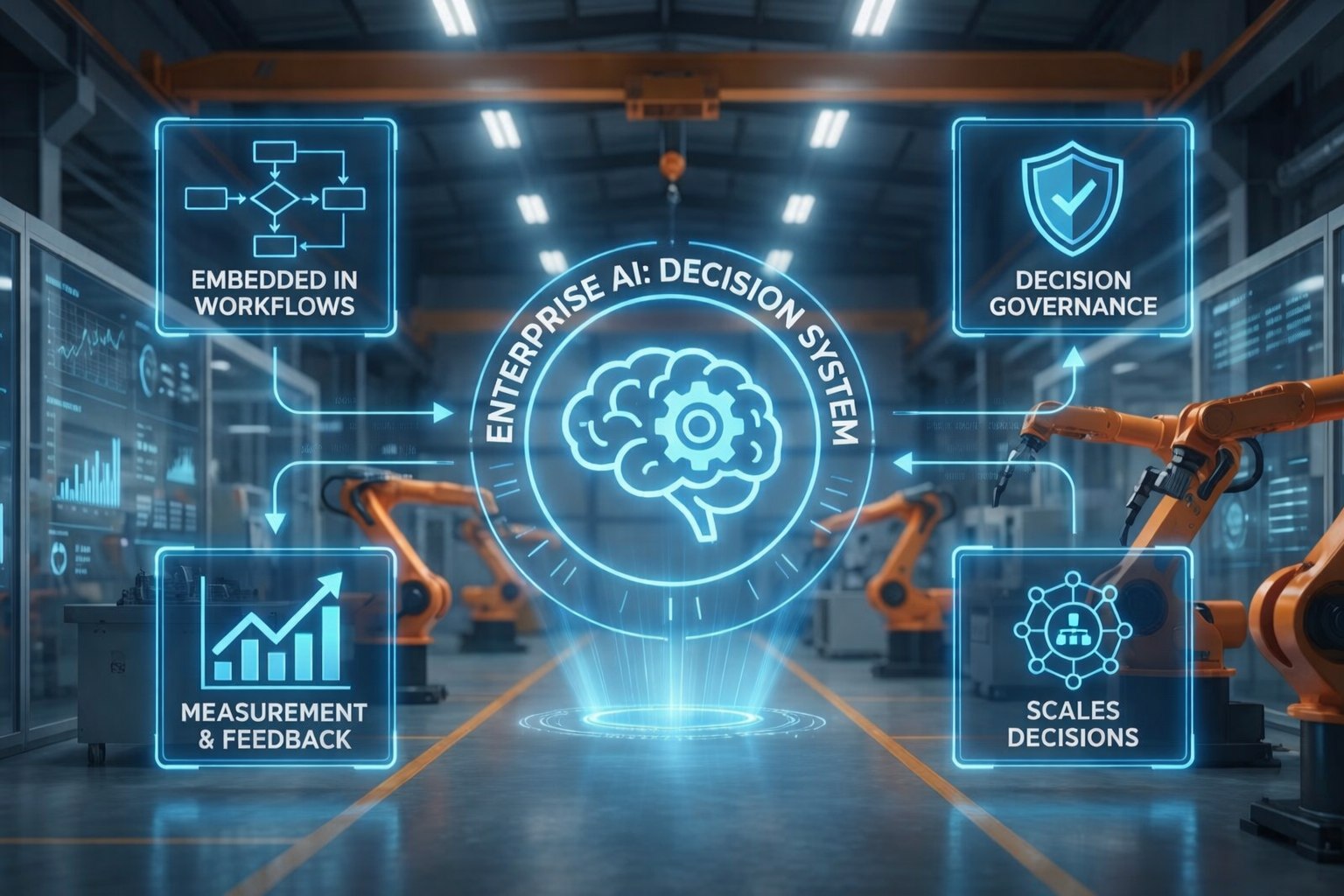
What Enterprise AI Actually Looks Like (Hint: It's Not Chatbots)

What Enterprise AI Actually Looks Like (Hint: It's Not Chatbots)

Enterprise AI is not a user interface. It is a decision layer. Most public attention has settled on conversational tools because they are visible. Enterprises do not win by visibility. They win by changing how decisions are made at scale.

Jan 19, 20269 min read
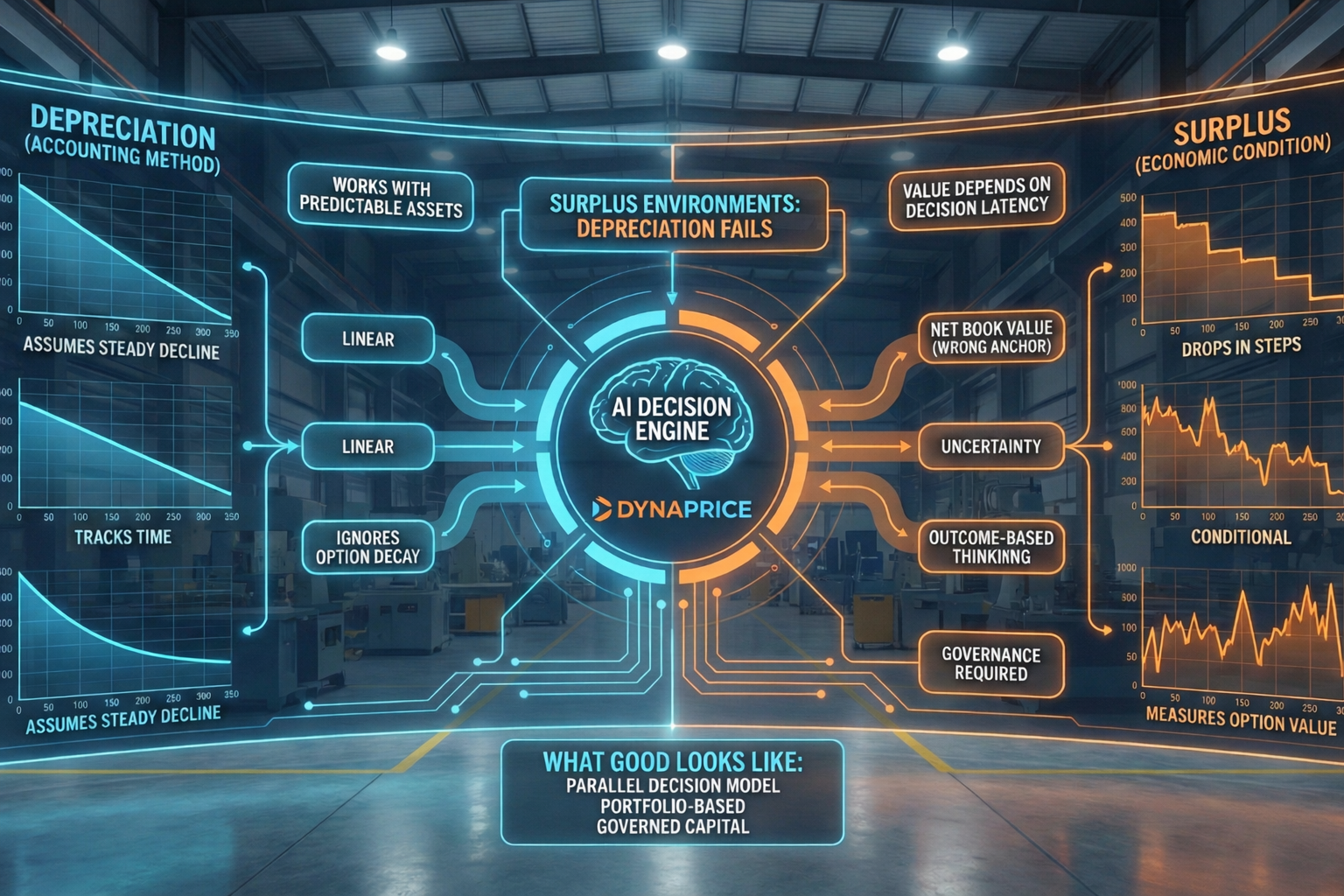
Why Depreciation Schedules Fail in Surplus Environments

Why Depreciation Schedules Fail in Surplus Environments

Depreciation is an accounting method, not a value method. In surplus environments, time does not reduce value smoothly—it changes the probability of outcomes.

Jan 20, 20268 min read
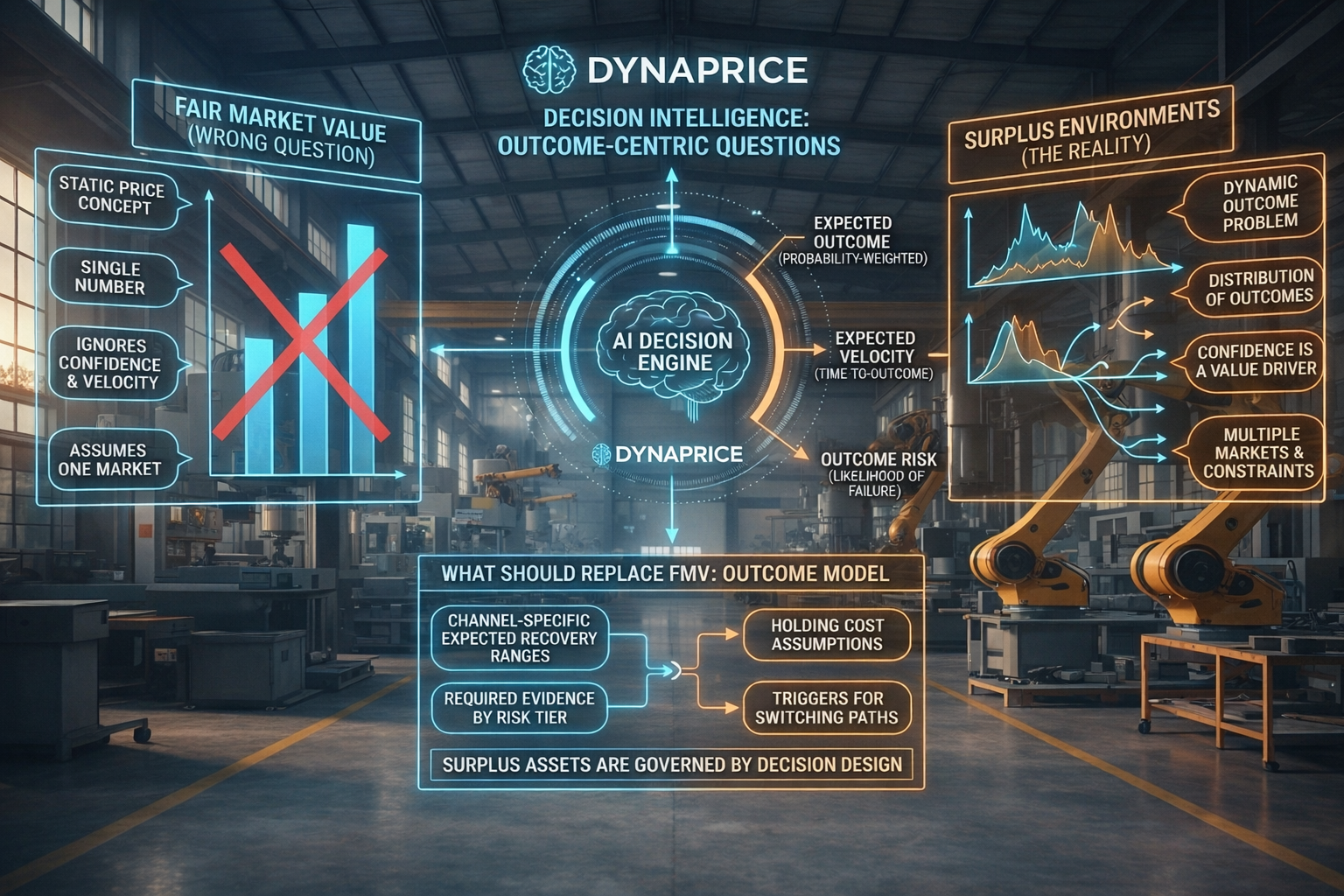
Why "Fair Market Value" Is the Wrong Question for Surplus Assets

Why "Fair Market Value" Is the Wrong Question for Surplus Assets

Fair market value is a price concept. Surplus assets are an outcome problem. The difference matters because surplus does not fail at pricing. It fails at decisions.

Jan 21, 20269 min read
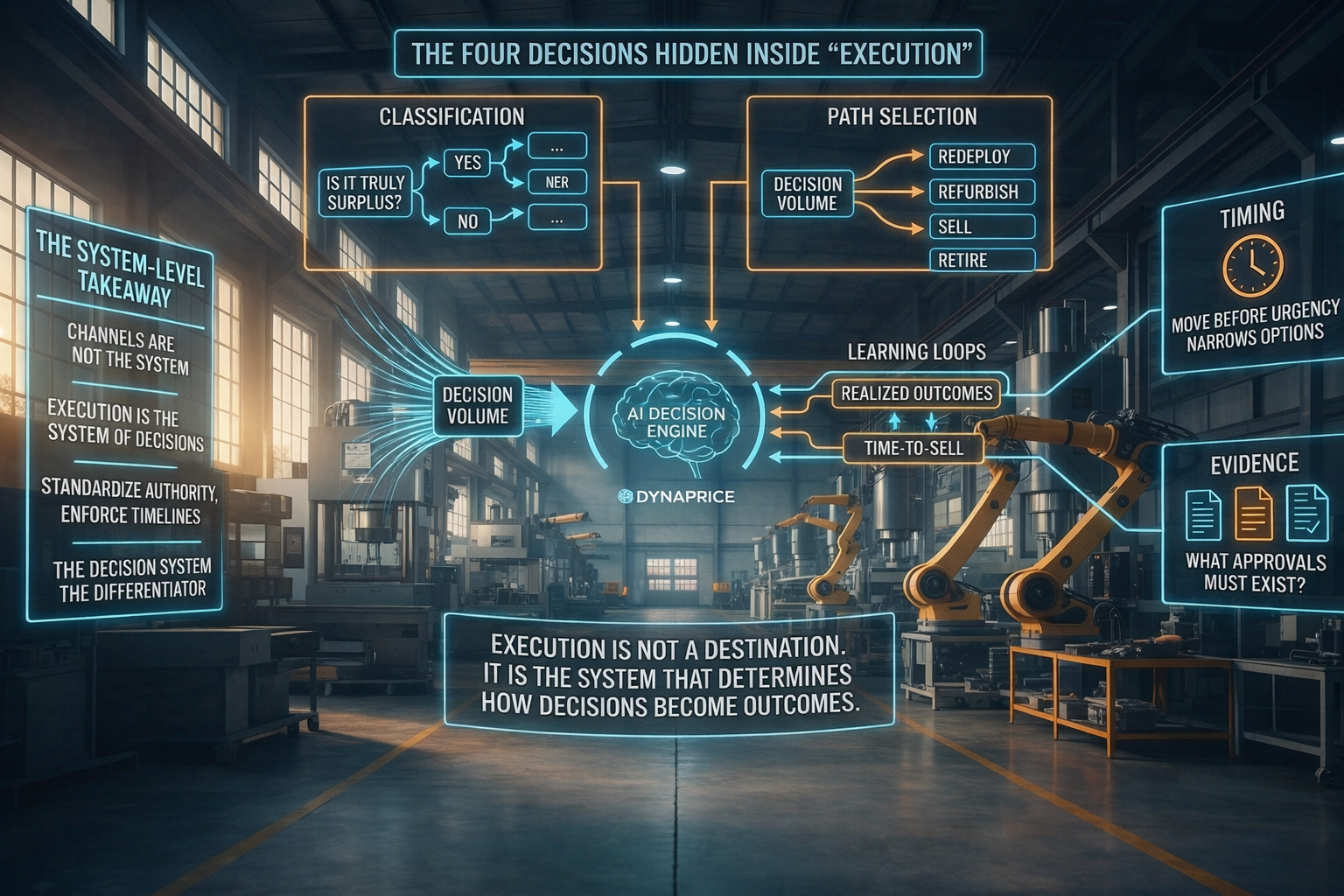
Execution Is Not a Channel — It's a Decision System

Execution Is Not a Channel — It's a Decision System

Enterprises often talk about execution as if it is a place. Execution is not a destination. It is the system that determines how decisions become outcomes.

Jan 22, 20267 min read
Why AI Models Fail Without Outcome Feedback

Why AI Models Fail Without Outcome Feedback

AI can scale decisions. It cannot validate them. Validation comes from outcomes. In enterprise environments, the most common failure is not that a model is inaccurate. It is that the model is unaccountable.

Jan 23, 202610 min read
What a Day Looks Like Inside a SCALM-Enabled Organization

What a Day Looks Like Inside a SCALM-Enabled Organization

A SCALM-enabled organization does not "handle surplus." It governs it. That difference is visible in daily work.

Jan 24, 20268 min read
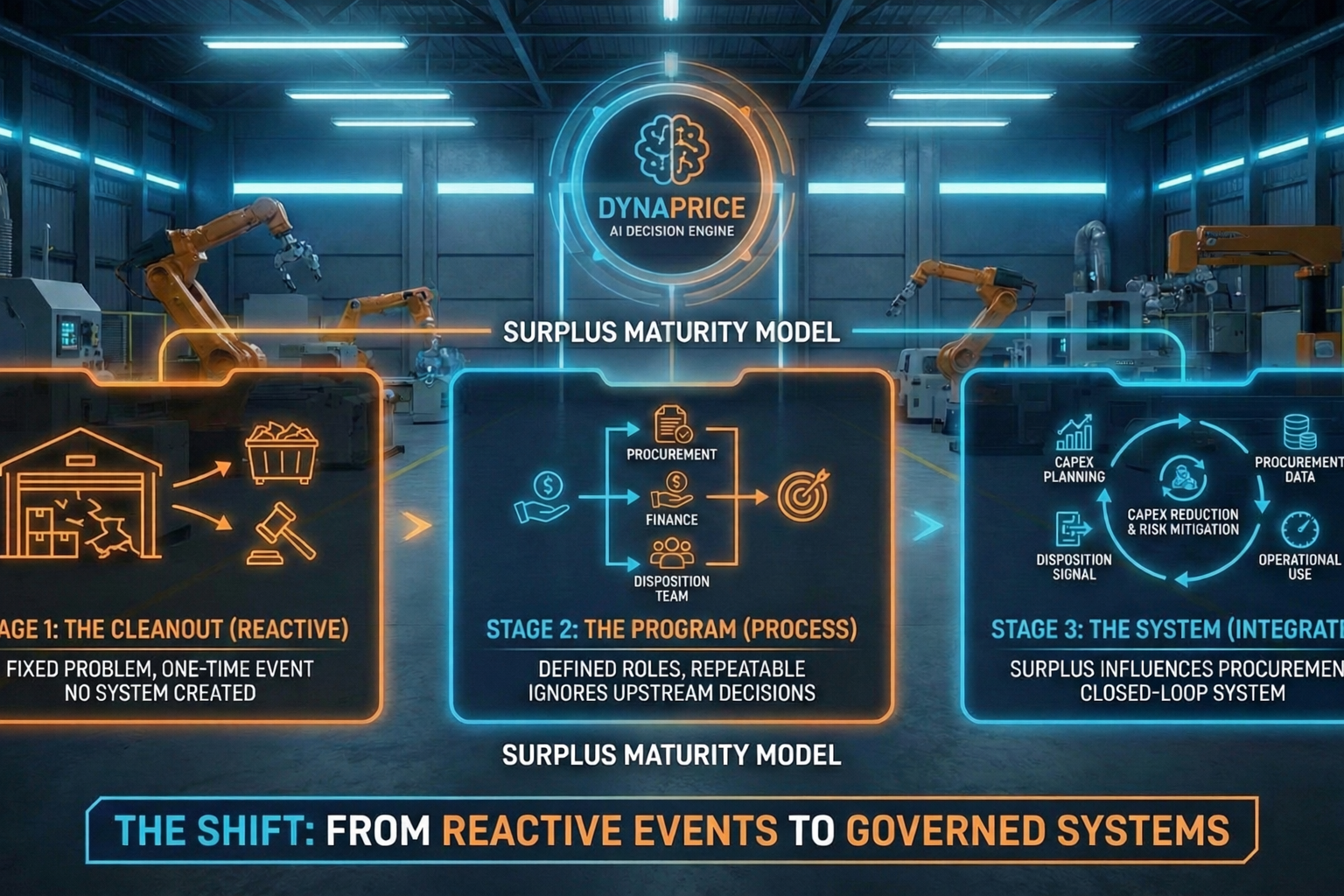
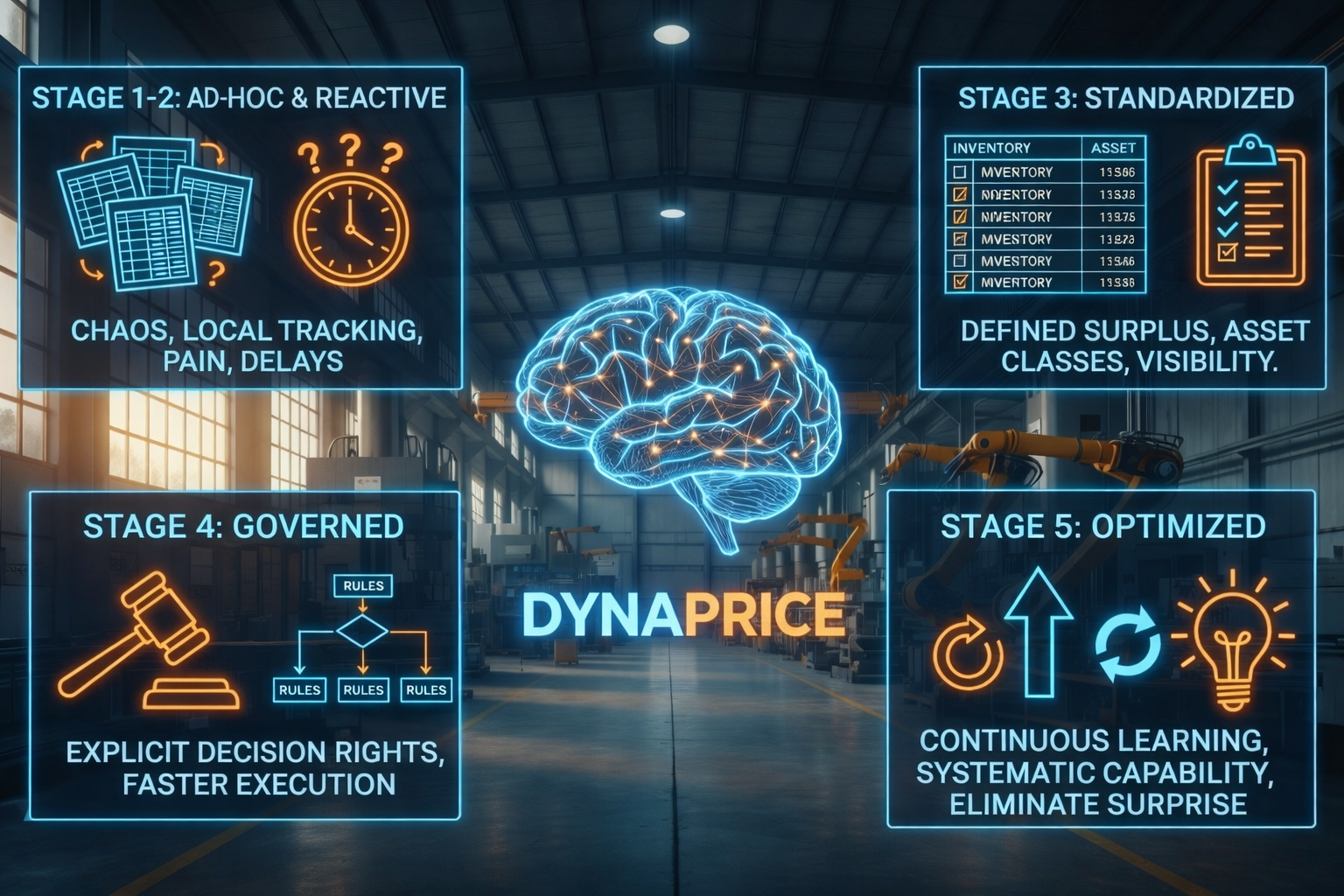
The SCALM Maturity Model: From Chaos to Governance

The SCALM Maturity Model: From Chaos to Governance

SCALM maturity is not a technology journey. It is a decision maturity journey. Enterprises move through predictable stages as surplus becomes too material to ignore.

Jan 25, 202611 min read
Common SCALM Mistakes (and How to Avoid Them)

Common SCALM Mistakes (and How to Avoid Them)

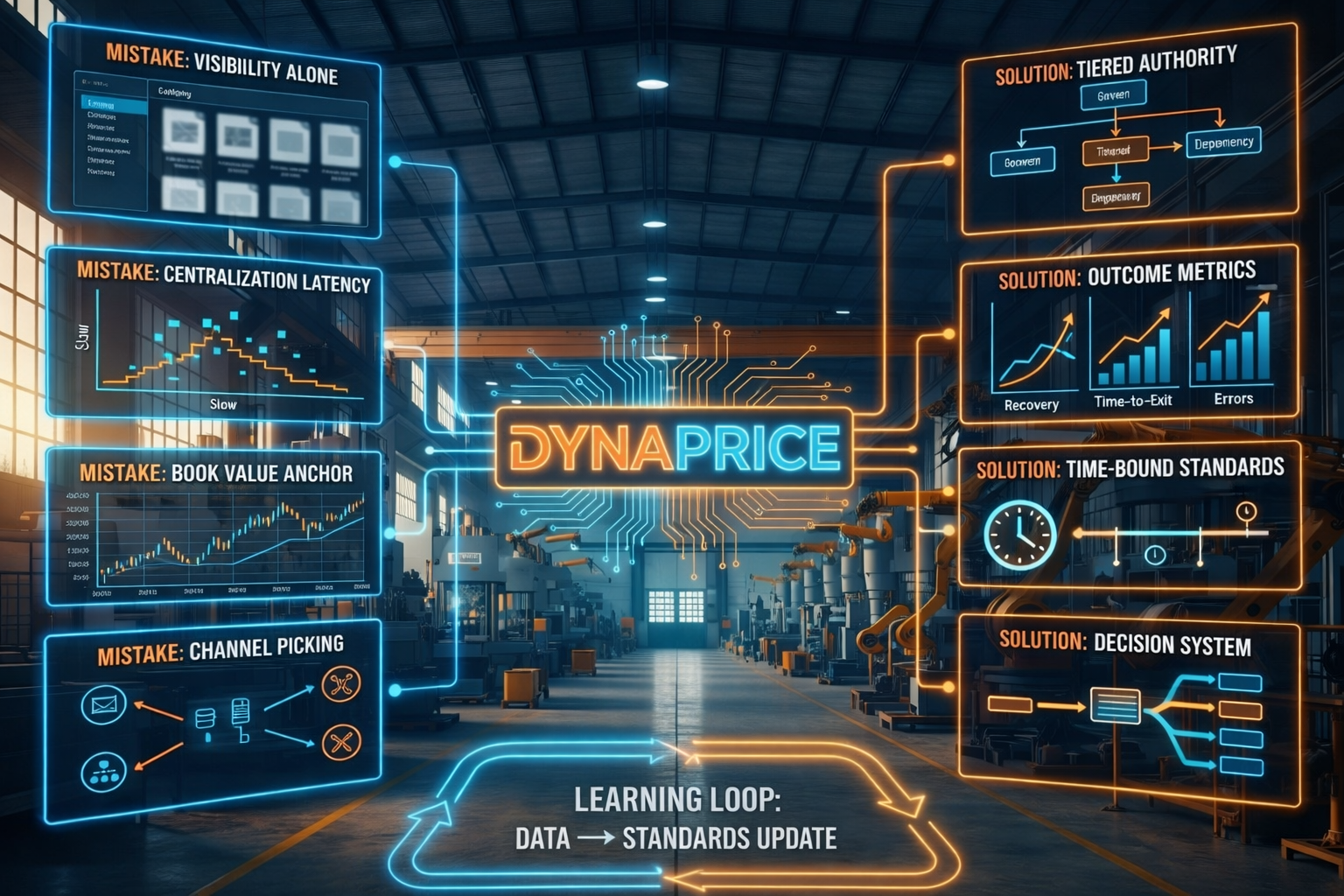
SCALM fails in predictable ways. Not because the discipline is unclear. Because enterprises try to treat governance as a project.

Jan 26, 20269 min read
Asset Lifecycle Management vs Capital Asset Lifecycle Management

Asset Lifecycle Management vs Capital Asset Lifecycle Management

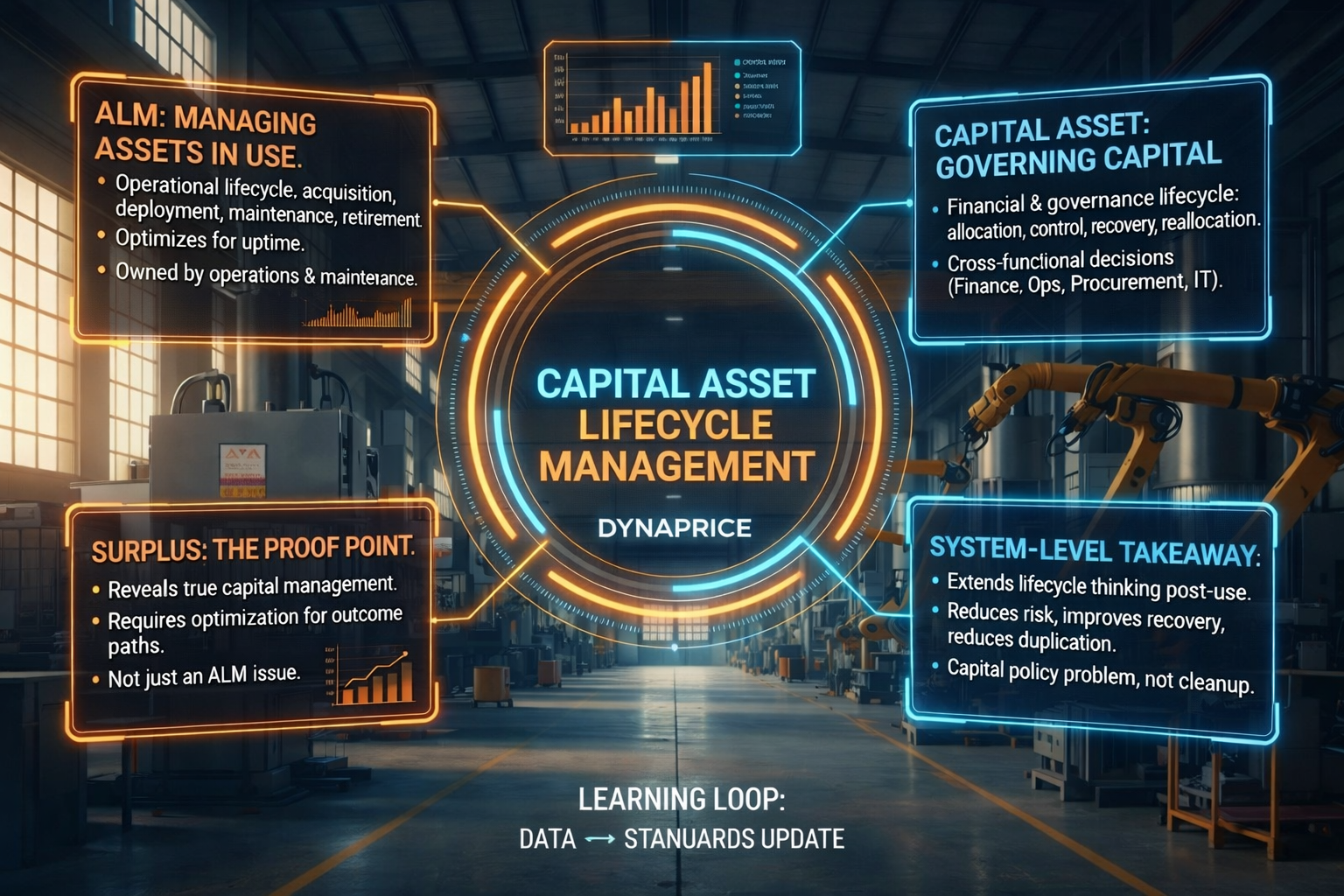
Enterprises manage lifecycles. They do not always manage capital. That difference is why surplus exists as a persistent blind spot.

Jan 27, 20268 min read
What Is Execution-Anchored Decision Intelligence?

What Is Execution-Anchored Decision Intelligence?

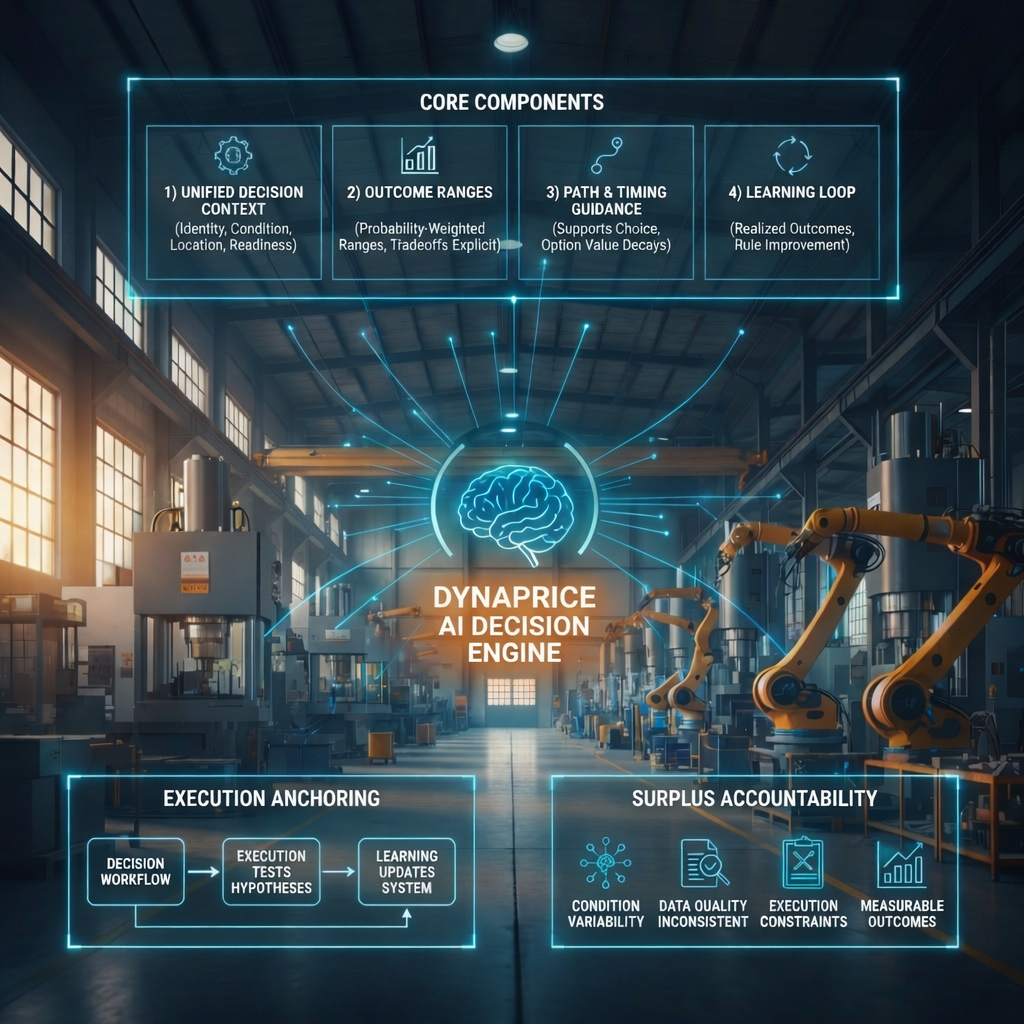
Decision intelligence is not prediction. It is governed decision support. Many systems produce recommendations. Few systems remain accountable to outcomes.

Jan 28, 20269 min read
Surplus Capital Assets vs Inventory: What's the Difference?

Surplus Capital Assets vs Inventory: What's the Difference?

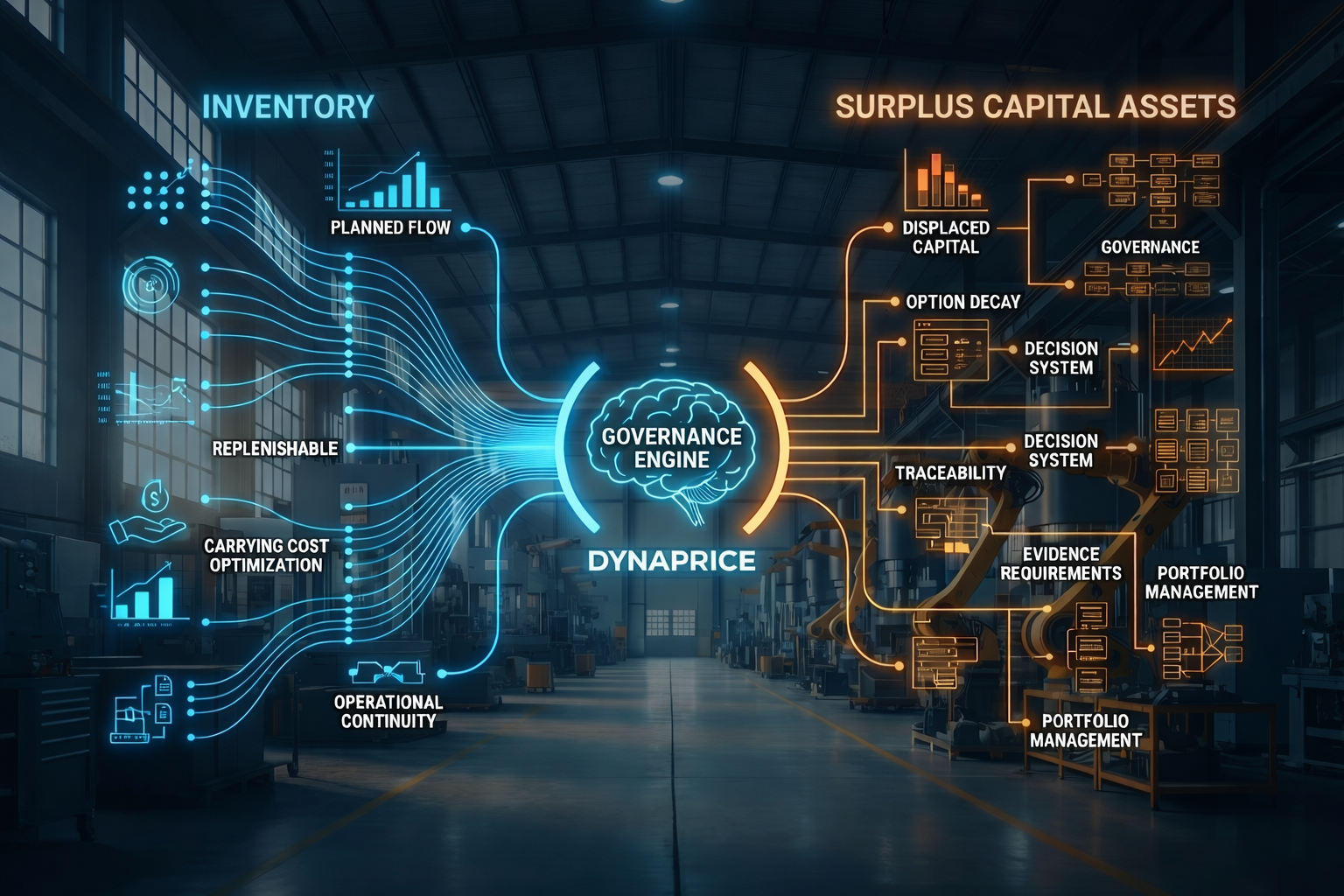
Enterprises confuse surplus with inventory because both sit in storage. That is a surface similarity. Inventory is a planned operating asset. Surplus capital assets are displaced capital.

Jan 29, 202610 min read
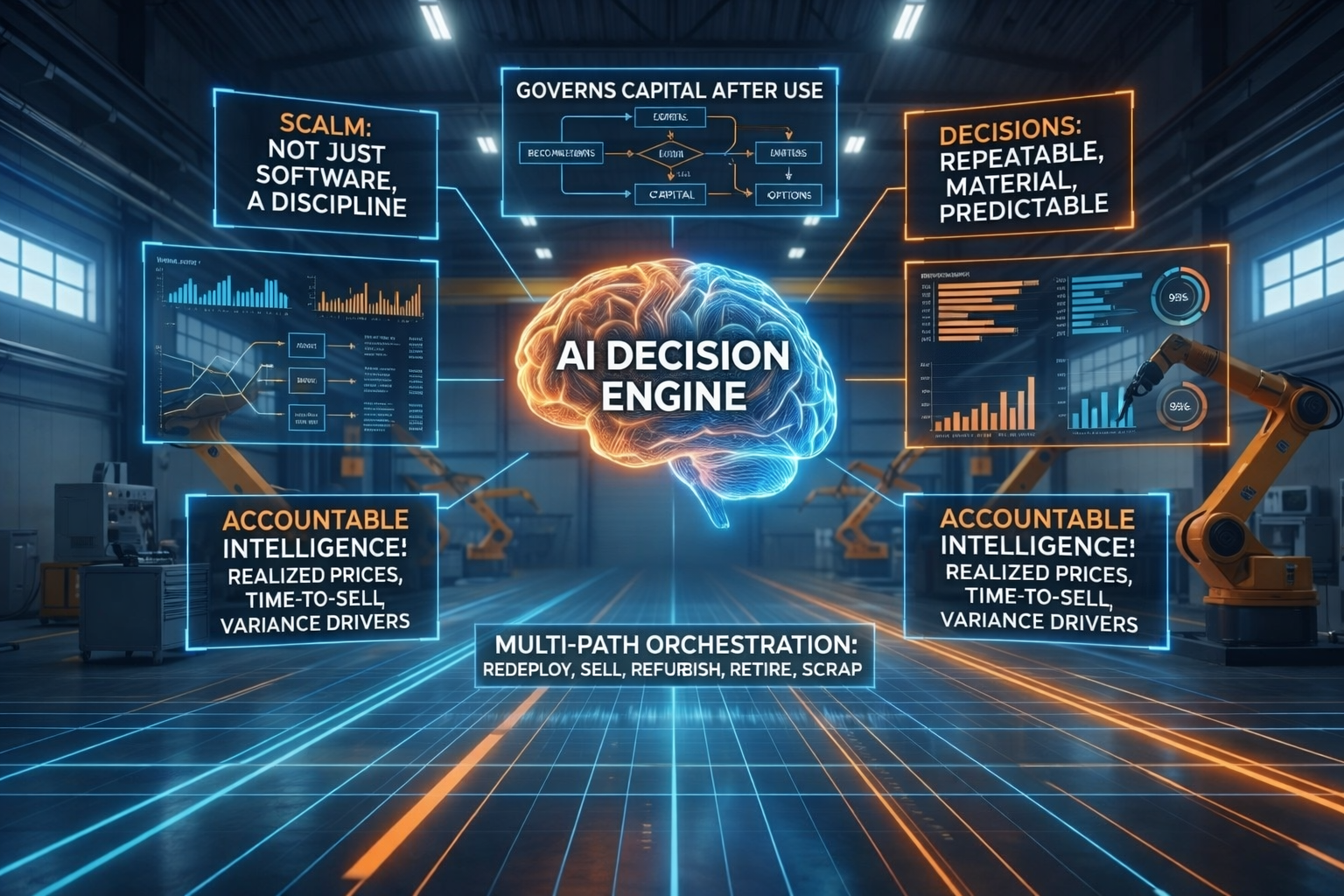
Why We're Building SCALM (Not Just Software)

Why We're Building SCALM (Not Just Software)

Software solves tasks. SCALM defines a discipline. The distinction is not branding. It is scope.

Jan 30, 20268 min read
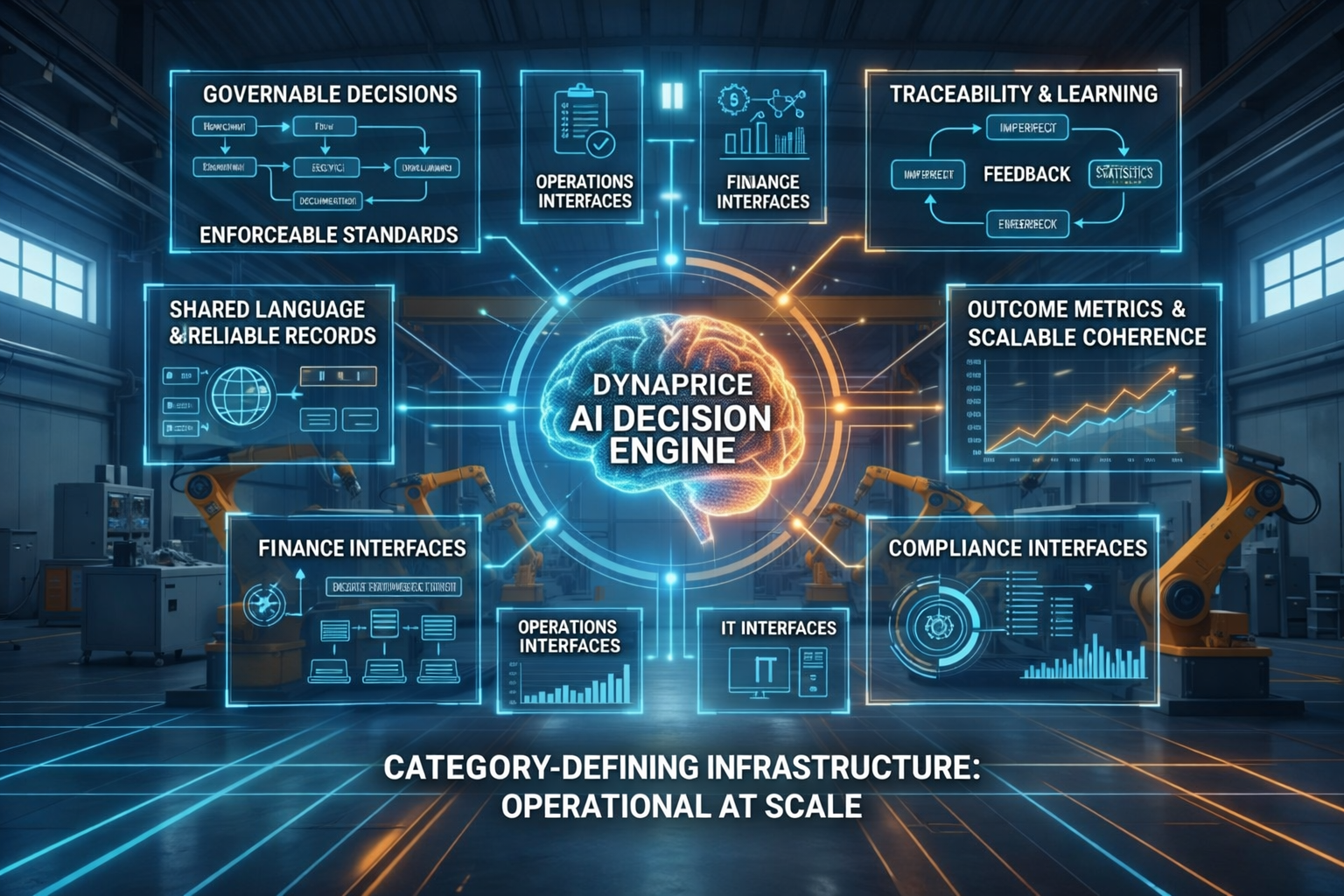
What It Means to Build Category-Defining Infrastructure

What It Means to Build Category-Defining Infrastructure

Infrastructure is not a feature set. Infrastructure is what other systems depend on. It is durable, composable, and designed for reuse.

Jan 31, 20269 min read