Building
Category-Defining
Infrastructure
Infrastructure is not a feature set. It is the organization's operating system—durable, composable, and designed for scale.
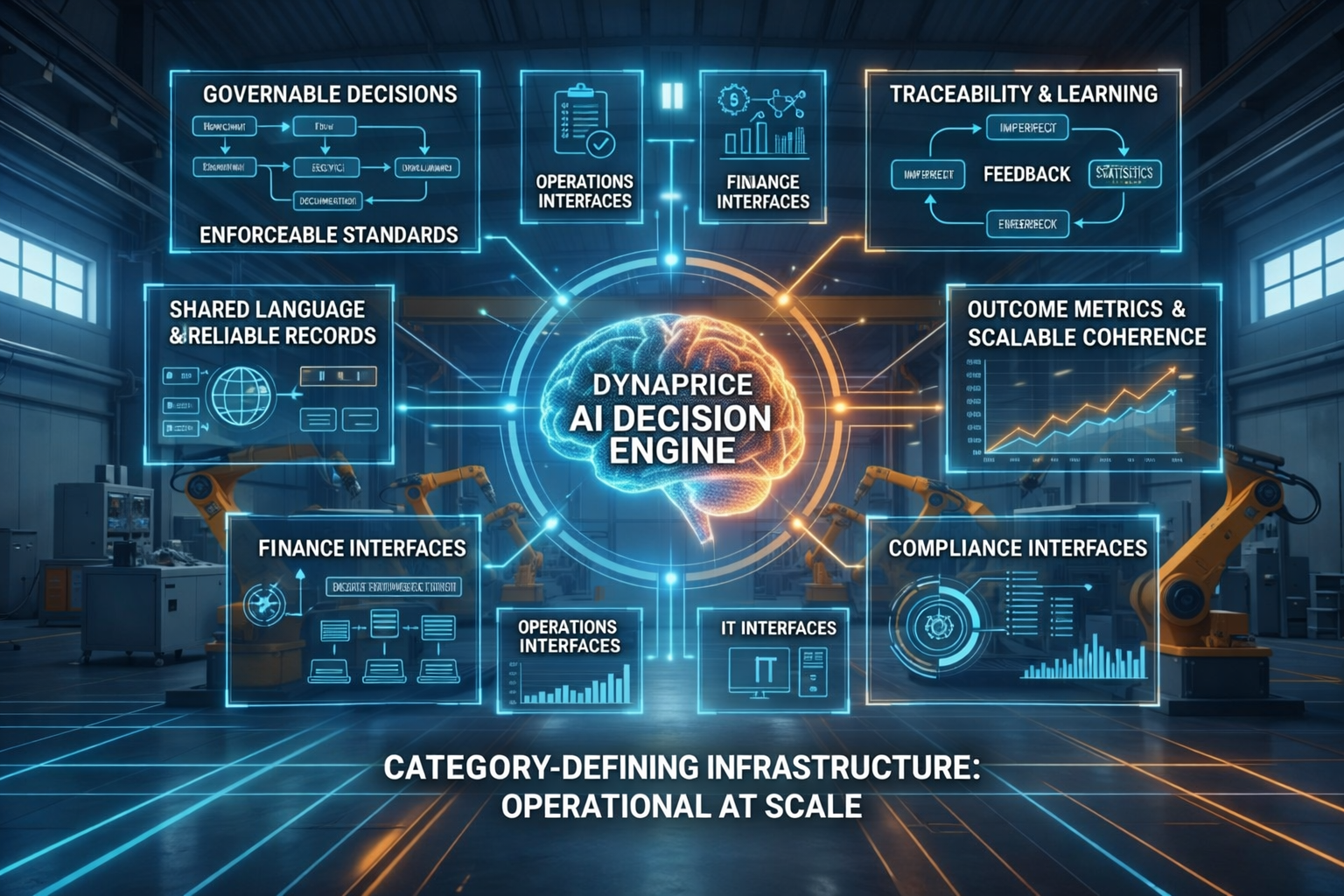
What Makes It Category-Defining?
Category-defining infrastructure makes a new discipline operational at scale. It doesn't merely support existing workflows; it changes what becomes governable.
Shared Language
System of Record
Decision Rights
Evidence & Traceability
Outcome Learning
The Enterprise Test
Does the organization become more coherent as volume grows?
- Better Standards
- Faster Decisions
- Predictable Outcomes
Trust by Design
In enterprise environments, trust is not a sentiment. It is a system property. Without trust, organizations default to local workarounds that fragment standards.
Why Categories Are Not
Invented by Marketing
Enterprises adopt categories when old categories no longer explain reality. For decades, surplus was treated as disposal. Those categories were convenient, not correct.
Category-defining infrastructure creates trust by design. It makes it easier to follow standards than to bypass them. That is the real adoption mechanism.
Infrastructure Clarifies Interfaces
When interfaces are clear, the organization can scale without constant escalation. When interfaces are unclear, the organization scales conflict.
Finance
Interfaces with policy: thresholds, controls, outcome metrics.
Operations
Interfaces with execution: staging, readiness, logistics.
IT
Interfaces with systems: record integrity, access control, auditability.
Compliance
Interfaces with traceability: documentation, approvals, risk tiering.
Infrastructure Enables Learning
A discipline becomes mature when it learns. Learning requires repeated cycles with consistent measurement.
"If outcomes are not linked to decisions, learning is guesswork. If learning does not update standards, learning is cosmetic."
This is how the discipline becomes defensible. It can explain not only what it did, but why it does it that way.
1. Decision Made
Standard enforced via policy interface
2. Action Executed
Traceable logistics and operations
3. Outcome Recorded
Financial & compliance data captured
4. Standards Updated
Automated feedback loop improves logic
The System-Level Takeaway
When done well, infrastructure does not feel like software. It feels like the organization's operating system. That is what categories ultimately are: shared operating systems for decision-making.
© 2024 Dynaprice. All rights reserved. Category-Defining Infrastructure.